Alpha-1 Antitrypsin Deficiency (Alpha-1) is a genetic condition that is passed from parents to children through genes.

Alpha-1 is caused by a mutation in the SERPINA1 gene. Many mutations to this gene have been identified, but only a few cause serious lung, liver, or skin disorders. These mutations are called “S” and “Z”. Normal, unmutated copies of this gene are called “M”. These gene variants are known as alleles, and a child inherits two copies of each allele, one from each parent.
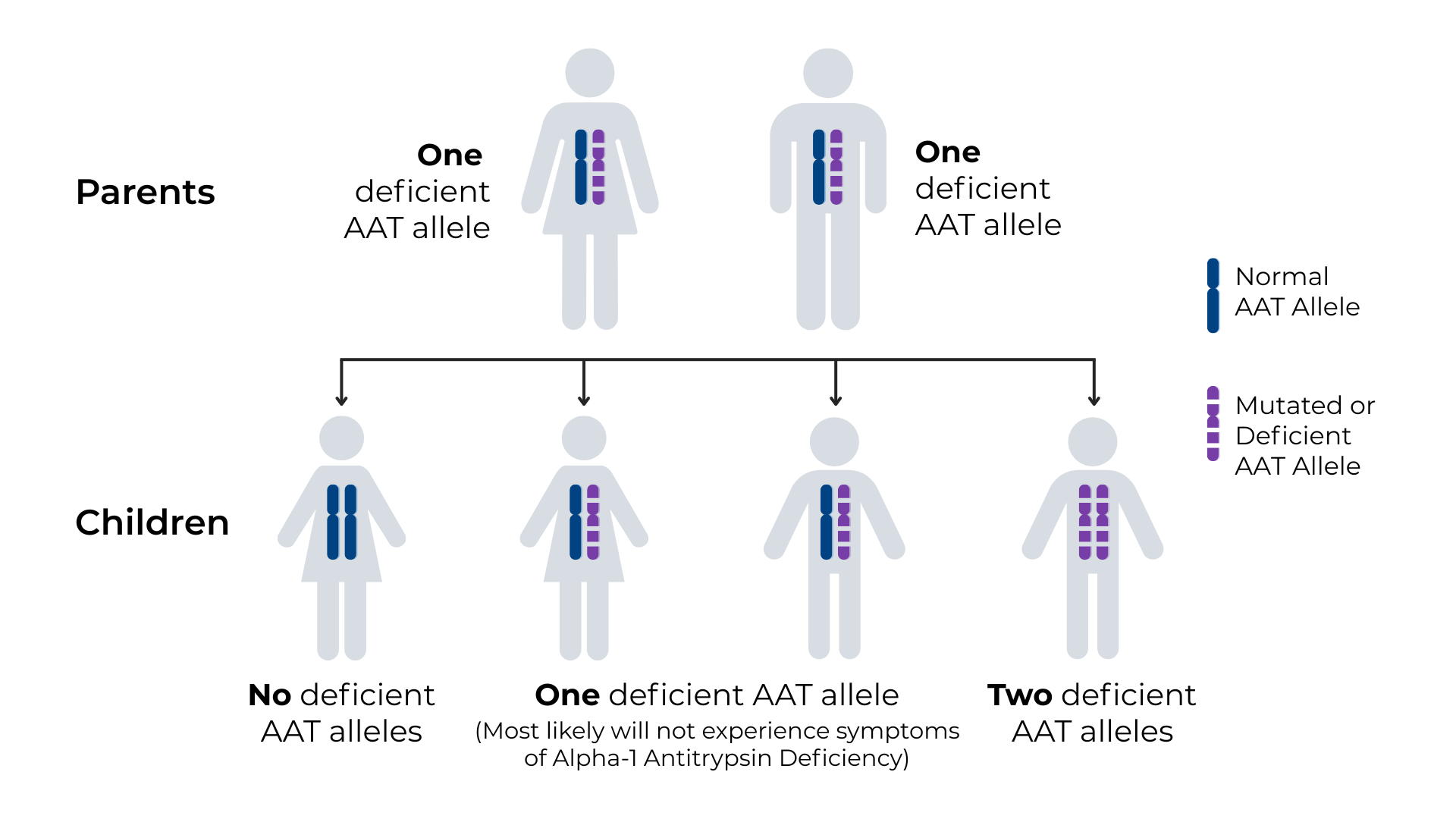
These genes are passed from parent to child, and if a child receives two copies of the mutated gene, they will have Alpha-1.
- ZZ genes: People with two copies of the mutated “Z” gene will have low levels of alpha-1 antitrypsin (AAT) in their blood, which increases their risk of developing lung disease.
- SZ genes: These people also have low levels of AAT in their blood and are at risk of developing lung disease. However, they are less likely to develop lung disease than those with ZZ genes.
It is also possible for someone to have one normal (M) copy of the SERPINA1 gene, and one mutated copy (Z or S). These people with MZ or MS genes may have lower levels of AAT in their blood, but their levels are rarely as low as those with ZZ or SZ genes. People with MZ genes have only a slightly higher chance of developing lung disease than those with MM genes. People with MS genes have not been shown to be at higher risk for disease.
It is believed there may be up to 19 million people in the United States with MZ or MS genes. While these people may not exhibit symptoms of Alpha-1, it is possible for them to pass a defective copy of the SERPINA1 gene to their children. If both parents have MZ or MS genes, then there is a 1 in 4 chance that their child will receive two copies of the mutated gene and inherit Alpha-1.
Since people with MZ or MS status may not exhibit symptoms, it is possible they will be unaware of their genetic mutations. It may be only when their child is diagnosed with Alpha-1 that parents undergo genetic testing and discover the mutation.
People with MZ genes may be at greater risk for developing emphysema. This risk is typically small, unless the person is a smoker or is exposed to high levels of air pollution. They may also be at greater risk of developing chronic obstructive pulmonary disease (COPD) if they have relatives with COPD. There is currently no known increased risk for lung disease in those with MS status.
Lung symptoms linked to MZ status include:
- Shortness of breath
- Wheezing
- Chronic cough and phlegm production
- Chronic bronchitis
- Recurring chest colds
- Decreased exercise tolerance
- Year-round allergies
- Bronchiectasis
Those with MZ genes are at slightly elevated risk of chronic liver disease, and research suggests disease may appear only in those with MZ genes who have experienced prior damage to their liver from something else, such as a virus, chemical exposure (including alcohol), or being overweight. There is currently no known increased risk of liver disease in those with MS status.
Liver symptoms linked to MZ status include:
- Jaundice (yellowing of the eyes and skin)
- Ascites (swelling of the abdomen)
- Vomiting blood or passing blood in the stool
- Elevated liver enzymes or unexplained liver problems
Who should be tested?
Genetic testing is advised for first degree relatives (parents, siblings, children) of a person with Alpha-1, but the decision to test should be discussed with a healthcare provider with knowledge of genetic disease beforehand.
Testing is also advised for those with the following conditions:
- COPD (emphysema and/or chronic bronchitis)
- Unexplained liver disease
- Liver disease with a family history of liver disease
If it is discovered that you have MZ or MS genes and are considering having children, you should have a discussion with a genetic counselor.
Family Planning
If you have Alpha-1 or are an Alpha-1 carrier and are planning to have children, you may want to talk to an Alpha-1 genetic counselor. A genetic counselor can answer questions about the risk of your future child(ren) inheriting Alpha-1 and explain the choices that are available.
Call 1-855-476-1227 to schedule an appointment with a genetic counselor through the Alpha-1 Foundation