Every February, the rare disease community comes together with a shared purpose: to raise awareness, inspire action, and amplify the voices of millions of individuals and families living with rare conditions. For the Alpha-1 Foundation (A1F), Rare Disease Day is not just a single day of recognition, but a month-long commitment to education, advocacy, and connection, ensuring that Alpha-1 Antitrypsin Deficiency (Alpha-1) remains part of the global rare disease conversation.
Rare Disease Day is observed on the last day of February each year and serves as a powerful reminder of the scale and impact of rare diseases worldwide. More than 300 million people across the globe are living with a rare disease, and Alpha-1 is one of more than 7,000 rare conditions currently identified. Nearly 72% of rare diseases are genetic, and for many individuals, the path to diagnosis, treatment, and long-term care can be long and uncertain. Through awareness and advocacy, Rare Disease Day works to create visibility for these challenges while pushing progress forward.
Throughout February 2026, A1F is proud to collaborate with RareDiseaseDay.org and the National Organization for Rare Disorders (NORD) to raise awareness of Alpha-1 and support the broader rare disease community. Patients, caregivers, clinicians, researchers, and advocates are encouraged to take part by sharing educational resources, engaging in events, and telling their personal Alpha-1 stories. By downloading the Rare Disease Day Digital Toolkit and sharing official A1F content on social media using #Alpha1Awareness and #RareDiseaseDay, supporters can help extend awareness beyond a single day.
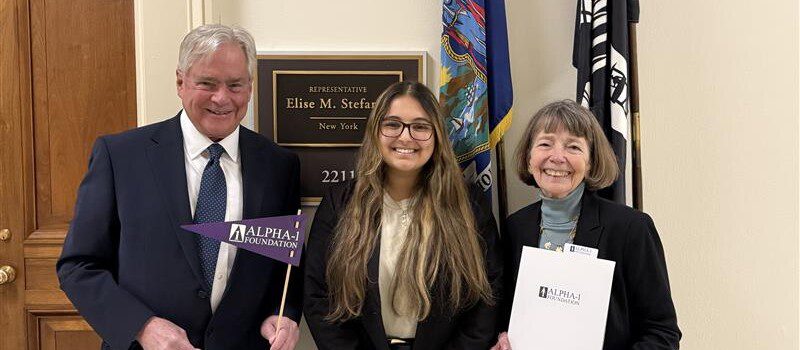
Rare Disease Day 2026 was marked by a series of events that brought the community together across education, research, and policy. On February 21st, Rare Disease Day was celebrated at the A1F’s Austin Education Day, where Alphas, family members, caregivers, friends, and healthcare providers gathered to learn about the latest Alpha-1 research, lung and liver disease, and practical strategies for living well with Alpha-1. On February 23rd, the U.S. Food and Drug Administration hosted a virtual Rare Disease Day public meeting focused on engaging patients and communities to advance rare disease medical product development and regulation. That same week, from February 23rd through 27th, the EveryLife Foundation for Rare Diseases convened advocates from across the country for Rare Disease Week, empowering participants to engage directly with policymakers and advocate for meaningful change. Thank you to Brian Pelletier and Amber Ross for attending as patient advocates and A1F Support Group Leaders.
On Monday, February 23rd, at the Health and Human Services Rare Disease Announcement, the U.S. Food and Drug Administration issued draft guidance for sponsors seeking approval for targeted individualized therapies by generating substantial evidence of effectiveness and safety when randomized controlled trials are not feasible due to small patient populations. “President Trump promised to accelerate cures for American families — and we are delivering, especially for children with ultra-rare diseases who cannot afford to wait,” said Health and Human Services Secretary Robert F. Kennedy, Jr. “We are cutting unnecessary red tape, aligning regulation with modern biology, and clearing a path for breakthrough treatments to reach the patients who need them most.”
Miriam O’Day, Senior Policy Advisor, welcomed the opportunity to directly engage FDA in leadership during the announcement. “I was excited to ask FDA Commissioner, Dr. Makary, about the flexibility of clinical trial design for rare disease therapies, including treatments for Alpha-1 Antitrypsin Deficiency. For small patient populations, traditional randomized controlled trials are often not feasible. FDA’s draft guidance recognizing alternative pathways to generate substantial evidence is an important step toward aligning regulatory science with the realities faced by rare disease communities. Families living with Alpha-1 cannot afford unnecessary delays — thoughtful flexibility in trial design can help bring safe, effective therapies forward more efficiently while maintaining rigorous standards.”
The week culminated on February 27th with Rare Disease Day at the National Institutes of Health (NIH), where a full day of in-person and virtual programming will center on lived experiences, scientific discovery, and collaboration. The event featured panel discussions, rare disease stories, scientific posters, exhibits, and an art exhibition, highlighting both the human and scientific dimensions of rare disease research. Thank you to Alpha-1 patient advocate, Dan Grimm for representing the Alpha-1 community at the event. On February 24th, the National Organization for Rare Disorders (NORD) hosted a public congressional briefing at the U.S. Capitol Visitor Center titled Patient Advocacy Driving Innovation for People Living with Rare Diseases, underscoring the critical role of advocacy and federal policy in advancing research and treatment. Today, an estimated 30 million Americans are living with a rare disease, yet fewer than five percent of known rare diseases have an FDA-approved treatment, a gap that continues to drive urgent advocacy and innovation.
At its core, Rare Disease Day is about people, sharing stories, building community, and reminding those affected by rare diseases that they are not alone. By participating in Rare Disease Day, raising awareness, attending events, and speaking out, the Alpha-1 community helps drive progress not only for Alpha-1 but for all rare diseases.