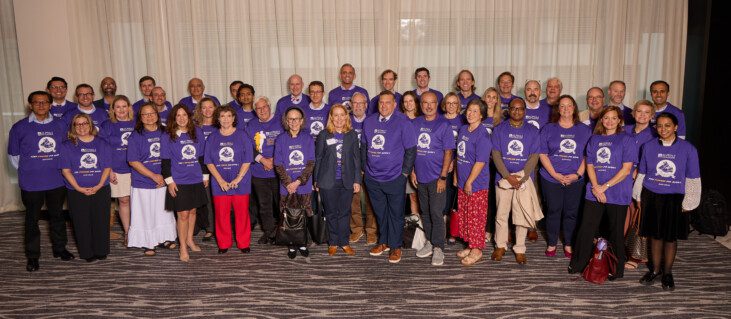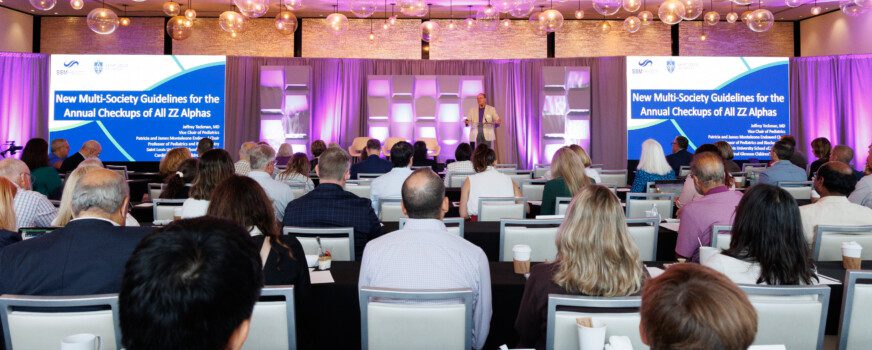
The Alpha-1 Foundation (A1F) welcomed researchers, clinicians, Alpha-1 Support Group Leaders, and A1F leadership to Miami, Florida, for the biennial A1F Leadership & Scientific Summit, a weekend focused on advancing research, strengthening access to care, and building connections across the field of Alpha-1 Antitrypsin Deficiency (Alpha-1).
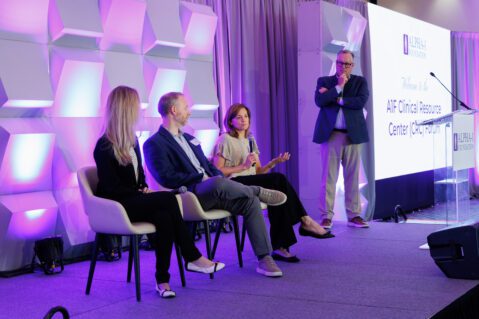
The weekend included A1F’s Clinical Resource Center (CRC) Forum, bringing clinicians from across the A1F CRC network together to exchange ideas, discuss emerging science, and explore practical ways to improve informed care for patients with Alpha-1. A1F President and CEO Scott Santarella opened the event by sharing A1F priorities and opportunities ahead, setting the stage for conversations around some of the important issues facing Alpha-1 care and detection today.
Earlier detection was a key part of those discussions. The Future of Detection: AlphaDetect Vision & Detection Playbook, featuring Julie Murray, AlphaDetect CEO Dr. Jamie Stoller of Cleveland Clinic and AlphaDetect Board Chair, and Dr. Brooks Kuhn of UC Davis and AlphaDetect Medical Director, explored why detection matters, the role CRCs can play, and tools designed to support detection efforts. Dr. Vick Tejwani of Cleveland Clinic also discussed what is known and what remains to be learned about Pi*MZ Alpha-1 heterozygosity.
“We all know that an informed healthcare provider can change the trajectory of an Alpha-1 journey by recognizing symptoms earlier, ordering appropriate testing, and helping patients connect with specialized care and trusted resources,” Santarella said. “The Alpha-1 Foundation Clinical Resource Centers are at the heart of A1F’s strategy to improve informed care.”
The A1F CRC Forum also looked at ways to strengthen care following diagnosis. Dr. Jeffrey Teckman of Saint Louis University and the Cardinal Glennon Children’s Hospital discussed new guidance for monitoring Alpha-1-associated liver disease, while Dr. Charlie Strange of the Medical University of South Carolina presented ongoing work involving AI-assisted diagnosis of Alpha-1. Recognizing that Alpha-1 can affect both the lungs and liver, Dr. Mike Wells and Dr. Meagan Gray of the University of Alabama at Birmingham joined Dr. Monica Goldklang and Dr. Alyson Fox of Columbia University Irving Medical Center to explore how stronger collaboration between specialists, including shared-care models and referral pathways, can improve how individuals with Alpha-1 navigate their care.
Together, these conversations addressed questions with direct relevance to people living with Alpha-1: How can more people be diagnosed earlier? How can individuals receive appropriate monitoring and care after diagnosis? And how can specialists work together more effectively for both the liver and the lung?
A1F Support Group Leaders also gathered for a training session on Friday afternoon, creating an opportunity to connect with one another, exchange information, and continue strengthening their leadership within the Alpha-1 community. Support Group Leaders were also invited to attend the A1F CRC Forum and A1F Investigators’ Meeting, allowing them to hear directly from researchers and healthcare professionals about current work in Alpha-1 research, detection, and care.
The weekend continued with A1F’s 8th Biennial Investigators’ Meeting, where A1F-supported investigators came together to share findings, exchange ideas, and discuss where Alpha-1 research is headed next. Research presented throughout the day spanned disease mechanisms, computational and omics topics, clinical research, and therapeutic approaches, reflecting the many ways investigators are working to better understand Alpha-1 and improve its diagnosis, care, and treatment.
Some of that work focused on understanding what happens at the earliest levels of the disease. Dr. Bibek Gooptu and Dr. Rhiannon Werder shared research examining the underlying mechanisms of Alpha-1, while investigators including Dr. Ariel Curiale and Dr. Camila Lopes-Ramos explored how newer research approaches, including AI and multi-omic analysis, can help researchers better understand disease progression and differences in Alpha-1-associated COPD.
Other presentations showed how research can begin to translate into changes in care. Dr. Leonard Riley presented work on a multicenter best practice alert designed to improve Alpha-1 testing and detection, while Suzanne Roche addressed genetic discrimination and what it can mean for people with Alpha-1. The day also looked ahead to potential therapeutic approaches, with investigators sharing research into DNA delivery, liver regeneration, delivering AAT directly to the lungs, and the development of a recombinant AAT therapeutic protein.
Taken together, the presentations showed that progress in Alpha-1 research is happening at many stages, from better understanding the biology of the condition and identifying people earlier to improving clinical care and exploring potential new treatments. Bringing investigators together to share findings and perspectives also creates opportunities for collaboration and helps move promising ideas forward across the Alpha-1 research field.
The meeting also put that work into the context of A1F’s long-term commitment to advancing Alpha-1 research. A1F has invested more than $100 million in Alpha-1 research and programs at more than 130 institutions worldwide over the past 30 years, including $3.8 million in grants in 2026. This year’s In-Cycle grant process received 58 Letters of Intent, demonstrating continued interest from investigators in pursuing new questions and opportunities in Alpha-1 research.
Together, the summit demonstrated the value of creating opportunities for the different groups advancing A1F’s mission. Researchers are asking new questions and pursuing potential approaches to treatment. Clinicians are working to improve detection, monitoring, and care. A1F Support Group Leaders continue to connect people with guidance, mentorship, information, resources, and support in their local communities. While each group has a different role, their work contributes to the same goal: helping to find a cure and improving the lives of people affected by Alpha-1.
Thank you to everyone who joined us and helped make this special weekend possible. Thank you to our sponsors: AlphaNet, CSL, Grifols, and Takeda. We are grateful for the conversations, connections, and shared commitment that filled the weekend, and we look forward to continuing this important work together.