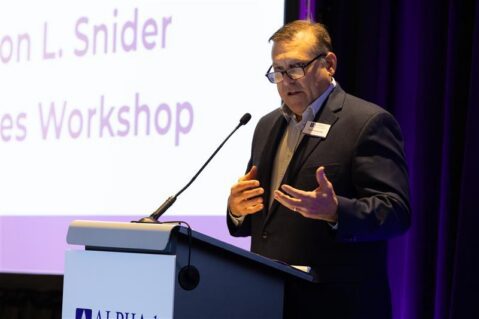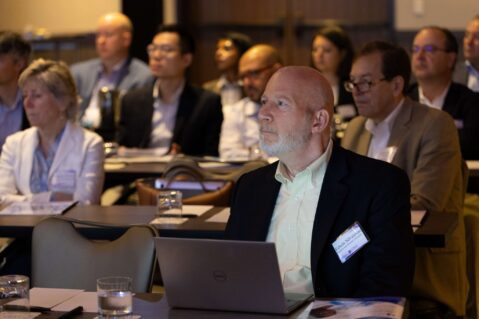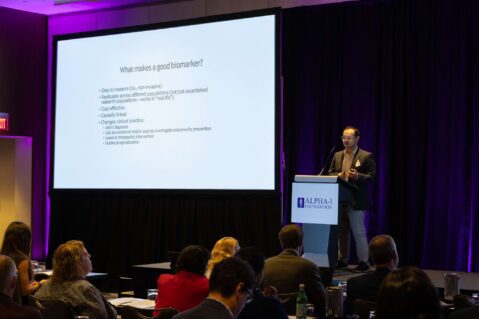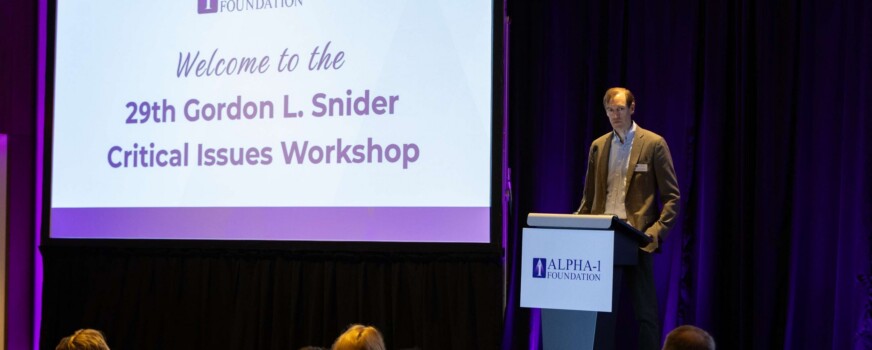
On Friday, April 17, 2026, the Alpha-1 Foundation (A1F) hosted the 29th Gordon L. Snider Critical Issues (GLS) Workshop: “Alpha-1 Foundation Research Infrastructure: Building for the Future”. GLS topical workshops are designed to provide new information that speeds the journey to a cure for Alpha-1 Antitrypsin Deficiency (Alpha-1). The purpose of this GLS Workshop was to carefully consider questions on the research infrastructure to build for the future with input from key stakeholders, identify other critical questions that stand in the way of research progress and determine what resources might be needed to address them. The information gathered from the workshop will help guide A1F efforts and future investment to develop the resources needed to facilitate success.
“We are fortunate to be entering a period in which multiple distinct therapeutic approaches are being developed and tested in patients with Alpha-1 for the first time. These advances bring great hope to the Alpha-1 community that treatments are within reach that could fundamentally alter the course of the condition, improve outcomes and quality of life for patients,” said Dr. Andrew Wilson, A1F Scientific Director.
The workshop was co-chaired by Dr. Andrew Wilson, Dr. Virginia Clark, and Dr. Mike Wells and consisted of three sessions of presentations and open discussions. Speakers included:
- Mark Brantly, MD (University of Florida)
- Matt Moll, MD (Harvard Medical School)
- Ed Silverman, MD, PhD (Harvard Medical School)
- Maria Basil, MD, PhD (University of Pennsylvania)
- Jacob McCauley, PhD (University of Miami)
- Jeanine D’Armiento, MD, PhD (Columbia University)
- Charlie Strange, MD (Medical University of South Carolina)
- Gery McElvaney, MD, PhD (Royal College of Surgeons in Ireland)
- Jeff Teckman, MD (Saint Louis University School of Medicine)
- Monica Goldklang, MD (Columbia University)
- George Washko, MD (Harvard Medical School)
The 29th Gordon L. Snider Critical Issues Workshop brought together leaders in Alpha-1 antitrypsin deficiency (Alpha-1) research to identify clinical data and biological resources, both already existing and needed, to advance new therapies and potential cures. Experts reviewed the evolution of “omics” technologies and how their analysis, in combination with clinical data repositories, can be applied to better predict disease outcomes and identify therapeutic targets. Other sessions highlighted the logistical complexities and immense value of acquiring fresh lung and liver tissues as well as serum samples to bridge the gap between population-level data and basic cellular biology. Representatives from major cohort studies of Alpha-1 lung and liver disease shared longitudinal findings on disease progression, the proven benefits of augmentation therapy, and risks faced by specific heterozygote populations. The workshop concluded with a strategic call for the Alpha-1 Foundation to establish working groups to consider next steps, potentially including the collection, harmonizing, and mining of existing data; the establishment of cores to house biosamples and/or imaging data; and the creation of incentives to encourage the use of such resources by investigators applying for Alpha-1 Foundation grant support.
“A1F is committed to assisting in the development of resources, potentially including datasets and cohorts, which can help meet the needs of industry partners to accomplish this goal. The patient is always at the center of everything that we do at the Foundation, and we are focused on finding a cure, “stated Scott Santarella, A1F President & CEO.