Creating viable permanent cures for genetic disease has proved challenging, but some promising treatments are coming.
Three years ago, at the age of 50, I found out I have dangerous genes. So in June, I went to Cambridge, Massachusetts, to see how they could be fixed. Among my 6 billion base pairs of DNA are two mutations — one inherited from my father, one from my mother — that give me Alpha-1-antitrypsin deficiency syndrome, also known as AATD or just Alpha-1. My mutation creates a misfolded protein that can’t fight off everyday lung damage, as it normally would. This protein can also pool in the liver, causing degeneration there too. The worst form of the mutation can make a carrier 10 to 20 times more likely to develop emphysema.
I went to Cambridge to visit Beam Therapeutics, which was founded to develop base-editing therapies. This is one of four techniques, three of them built on the science of Crispr, that are now available to permanently alter our DNA. One of the treatments Beam is working on seeks to repair the mutation that causes Alpha-1. In an ongoing trial, 29 volunteers have received the therapy, with encouraging outcomes and no complications so far. Before I visited Beam, David Liu — a co-founder of the company who’s also the primary inventor of base editing and a biochemist at Harvard University, the Broad Institute and the Howard Hughes Medical Institute — told me this was “the first time a pathogenic mutation in a person has ever been corrected.” In other words, it was the first time the specific DNA mutation causing a disease had been irreversibly altered. Liu also told me that an estimated 400 million people worldwide have a genetic disease. About 25 million of them are in this country.
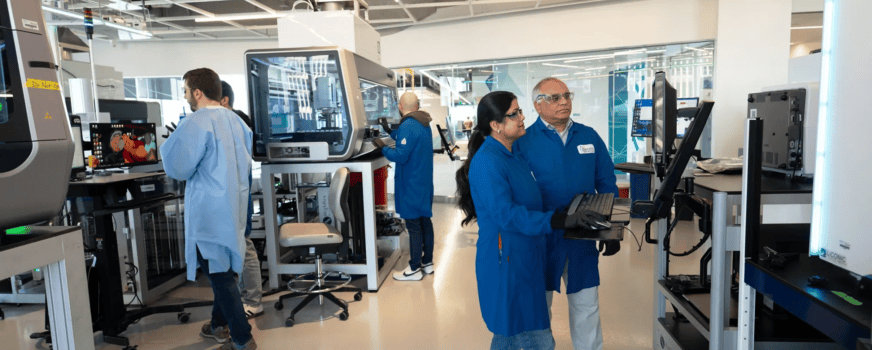
On a high floor overlooking the Charles River, Beam engineers were optimizing toaster-size robots to move cell samples and base-editing molecules from machine to machine, traveling on tracks near the ceiling. On another floor, scientists were carefully rearranging tubes and pumps to test one of the company’s recipes for proprietary “lipid nanoparticles.” Everyone from lab employees to Beam’s chief executive officer, John Evans, were proud to already be treating patients by permanently editing their DNA.
They were also aware that, after many years of hype, investors still have pointed questions about the technology. Will base editing indeed be a permanent fix? Will it prove safe for years afterward? Can a “one and done” therapy gain enough patients in a crowded market? Will insurance companies pay for it? And can Beam advance its science for yet more diseases before commercial revenue comes in?
The company is completing or just about to begin trials for treatments for Alpha-1 and for sickle cell, glycogen storage and phenylketonuria diseases. If all goes as planned, the Alpha-1 therapy will come to market around 2029. It and comparable treatments from Beam’s competitors are being viewed as a bellwether for the entire gene-editing ecosystem. Because of how the Alpha-1 mutation works and where it’s found, it’s widely regarded as the ideal medical and business test to see if editing our DNA can cure other diseases as well.
Continue reading the full story on Bloomberg.