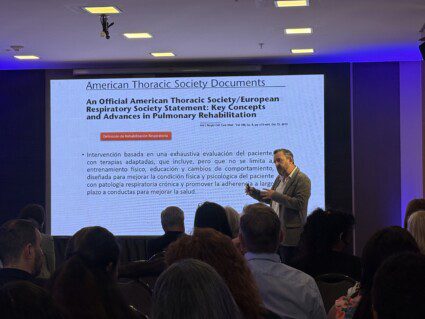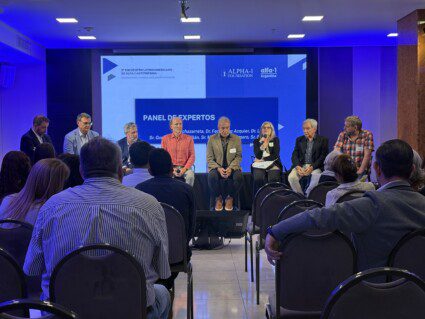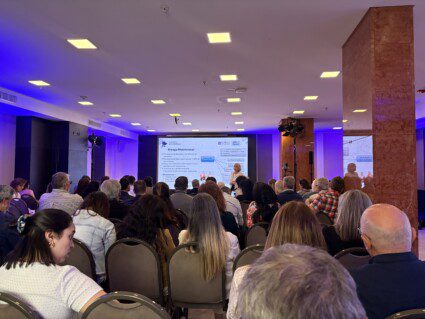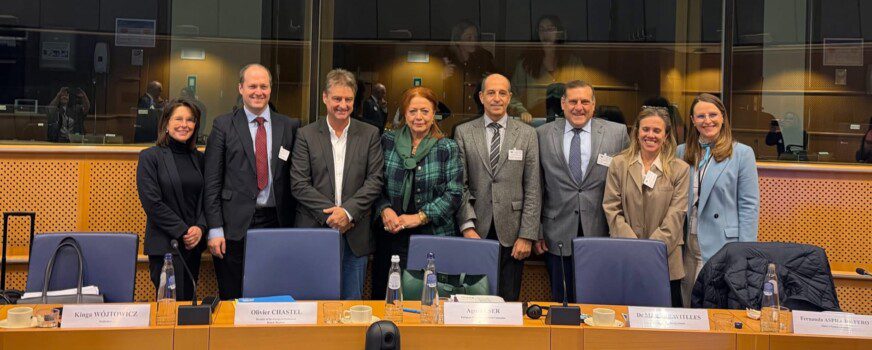
A1F’s role as the global leader among the world’s Alpha-1 community was highlighted recently at an Alpha-1 Awareness Month Recognition Forum held in conjunction with European Parliament on November 20, in Brussels, Belgium.
In collaboration RPP Group, and in partnership with the Alpha-1 Europe Alpha-1 Alliance, A1F seized on an opportunity to build momentum for rare diseases, and specifically the Alpha-1 community as the EU unlocks key opportunities associated with the upcoming Biotech Act and their ongoing implementation of the Substances of Human Origin (SoHO) regulation. A1F recognized the time is now to push for fair access to plasma-derived therapies and better care for all rare disease patients.
A1F presented to EU Parliament: its historical and considerable investment in funding researchers at European Union based institutions; our commitment to educating European Alphas through our Global Patient Congress and Investigators Conference held this past April in Lisbon, Portugal; and our engagement with EU Parliamentarians and patients through our recent social media video awareness campaign.
The Alpha-1 Foundation’s engagement with EU policymaking is core to advocacy efforts in Europe because the European Union sets the overall strategic and regulatory framework for rare diseases in Europe. While health remains a national competence, the EU’s complementary role is indispensable for advancing rare disease care, providing the necessary scale and coordination to overcome challenges such as low prevalence, fragmented expertise, and limited national resources.
EU initiatives shape how Member States develop and implement their national health systems for rare diseases. Key examples include the Clinical Trials Regulation (CTR), which has streamlined and harmonised the authorisation process for multinational clinical trials, making Europe more attractive for research and accelerating patient access to innovative medicines. The EU also actively supports national rare disease strategies through initiatives like the Orphan Medicinal Products Regulation, the Cross-Border Healthcare Directive, and the Pharmaceutical Package, alongside recommendations on screening and rare disease planning. Crucially, the establishment of European Reference Networks (ERNs), such as ERN-LUNG, directly addresses fragmented expertise by facilitating cross-border consultations and knowledge sharing, significantly improving diagnostic rates and treatment pathways for patients with complex conditions like Alpha-1.
Furthermore, the Substances of Human Origin (SOHO) Regulation ensures high standards of safety and quality for therapeutic substances, facilitating their safe cross-border exchange.
Looking ahead, the forthcoming Biotech Act represents a major strategic advance, aiming to establish a clear, predictable, and innovative regulatory framework to stimulate the development of new therapies, facilitate patient access, and strengthen Europe’s leadership in medical research.
Overall, when Alpha-1 is represented in EU debates, it directly influences the long-term structures and legislative frameworks underpinning national decisions.
Watch Meeting: https://alpha1.org/video-library/alpha-1-awareness-month-event-2025-recording/